
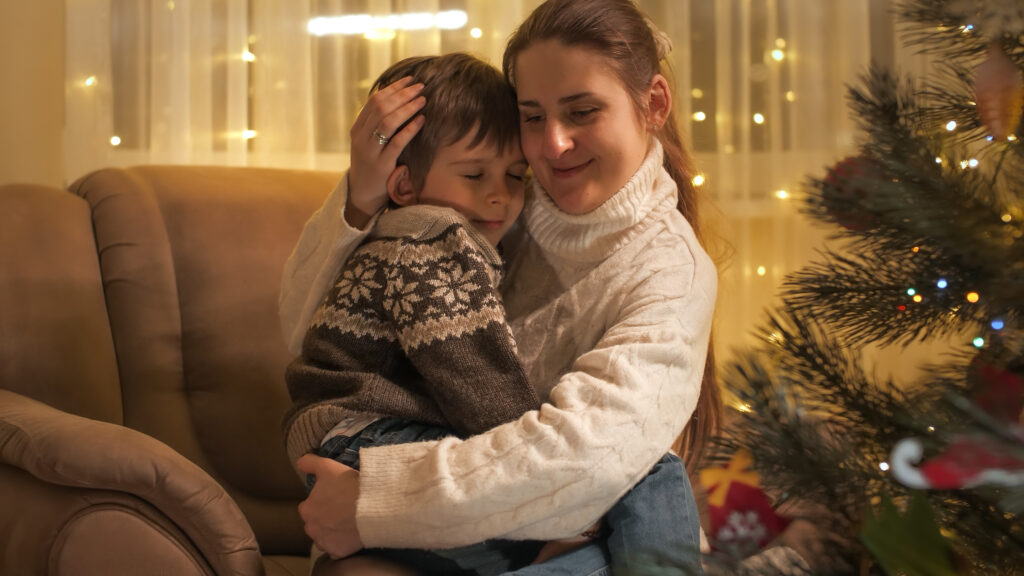
For most children in your setting, this last week before Christmas is pure glitter: the nativity costumes, the party plates, the countdown. But in almost every nursery there is a child for whom this December is different. A grandad who died in the autumn. Parents who separated over half term. A house that no longer has everyone in it. For that child, the tinsel doesn’t cancel the loss; sometimes it sharpens it, because everything around them is insisting on joy.
And very often, nursery is the steadiest place that child has right now. Home is full of adults doing their own grieving. Your setting still has the same pegs, the same songs, the same snack time. That steadiness is not a small thing. For a small child in a changed world, it can be the main thing.
How young children grieve
Young children don’t understand death the way adults do. Under-fives often don’t yet grasp that it’s permanent, which is why the same question (“when is Grandad coming back?”) can arrive again and again, sometimes cheerfully, sometimes at the paint table, weeks after you thought it was settled. Each time, it deserves the same calm, honest answer.
Grief in the early years rarely looks like adult sadness. It comes in bursts, in and out of play. A child might be inconsolable for ten minutes and then ask for the bikes. They might act out the funeral in the home corner, or put the baby doll to bed over and over. Some children regress: toileting slips, sleep goes strange, the long-abandoned comforter comes back, drop-off gets hard again. None of this is a problem to fix. It’s grief, being done the way small children do it, and play is one of the main places they do the work.
The words matter more than we think
The kindest language is the honest kind. “Died” and “dead” are better than the softenings we reach for, because young children take words literally. “We lost Granny” invites a search. “Gone to sleep” can make bedtime frightening. “Went away” makes every goodbye a worry. A gentle, truthful sentence (“Grandad died. His body stopped working. He isn’t coming back, and it’s nobody’s fault”) is easier for a child to hold than a comforting fog, even though it’s harder for the adult to say.
You don’t need perfect words, and you won’t have them; nobody does. Presence and routine do most of the work. Keep the rhythms of the day steady, and think ahead to the moments this week that might spike feelings: the nativity a parent isn’t there to watch, the “family” craft activity, the party. A quiet heads-up between staff, and a plan for who stays close to that child, is often all it takes.
Families are grieving too, and they may handle it in ways you wouldn’t choose, or within beliefs different from your own. The job is to follow their lead on what the child has been told, offer warmth without judgement, and keep gently sharing what you’re seeing at nursery. Our course Supporting Children Through Bereavement and Family Change was written for exactly these moments: how children understand death at different ages, what grief looks like in the early years, honest language that helps, and day-to-day support for the child and their family. It covers wider family change too, because separation, moving house, new babies and blended families bring their own quieter griefs, and a first Christmas after any of them is a milestone of its own.
Look after the adults as well
One more thing, said plainly because it’s important: supporting a grieving child can stir up your own losses, especially at this time of year. That’s normal, and it isn’t unprofessional. Practitioners carrying this work deserve a colleague who checks in, a manager who makes space for it, and permission to step out of the room for five minutes when a small person’s question lands somewhere tender. Teams that talk to each other carry it best.
Be ready before a family needs you to be
Supporting Children Through Bereavement and Family Change builds quiet confidence for the hardest conversations, with an NFAQ-accredited certificate on completion.
However this week unfolds in your setting, the steady adult who says the true, kind thing and keeps snack time at snack time is doing more good than they will probably ever know.