In most nurseries, December belongs to the older children. The preschool room is rehearsing songs, somebody has ordered a frankly ambitious quantity of glitter, and there’s a costume crisis brewing by the coat pegs. Walk down the corridor to the baby room, though, and the pace changes. Calm, unhurried, quietly repetitive. Which is exactly how it should be.
We hear a version of the same worry from managers a lot. The baby room staff are lovely, the babies are settled, fed, changed and cuddled, and everybody goes home happy. But is the practice intentional, or has the room simply drifted into a pleasant routine that nobody has examined for a while?
The first two years are not a warm-up act
The first two years of life are the most significant period of brain development a person will ever go through. That single fact should change how we staff, resource and respect the baby room. It isn’t the easy room, and it isn’t the place to park your newest apprentice while she finds her feet. There’s a strong argument that it’s the most important room in the building.
Outstanding practice with babies also looks very different from practice with older children. No carpet time, no phonics, no junk modelling. What you get instead is attachment, responsive care and hundreds of tiny conversations a day. When a four-month-old babbles, and her key person babbles back, pauses, and waits for the reply, that serve-and-return exchange is doing serious developmental work. It looks like nothing. It’s almost everything.
Routines are the curriculum
In the baby room, a nappy change is not an interruption to the learning. It is the learning. A respectful, unhurried change, where the adult tells the baby what’s happening and waits for a response, does more for communication and trust than most planned activities ever will. The same goes for bottle feeds, sleep routines and the slow winter business of getting six babies into snowsuits for ten minutes of fresh December air.
Settings that get this right treat care routines as protected time rather than tasks to be raced through so the “real” activity can start. For some staff that’s a genuine mindset shift, particularly if they’ve come from older rooms where the planned activity is the main event of the morning. It takes a little confidence to tell a visitor that the nappy change was the highlight of the morning’s teaching, but in an under-twos room it very often was.
An environment that does some of the work
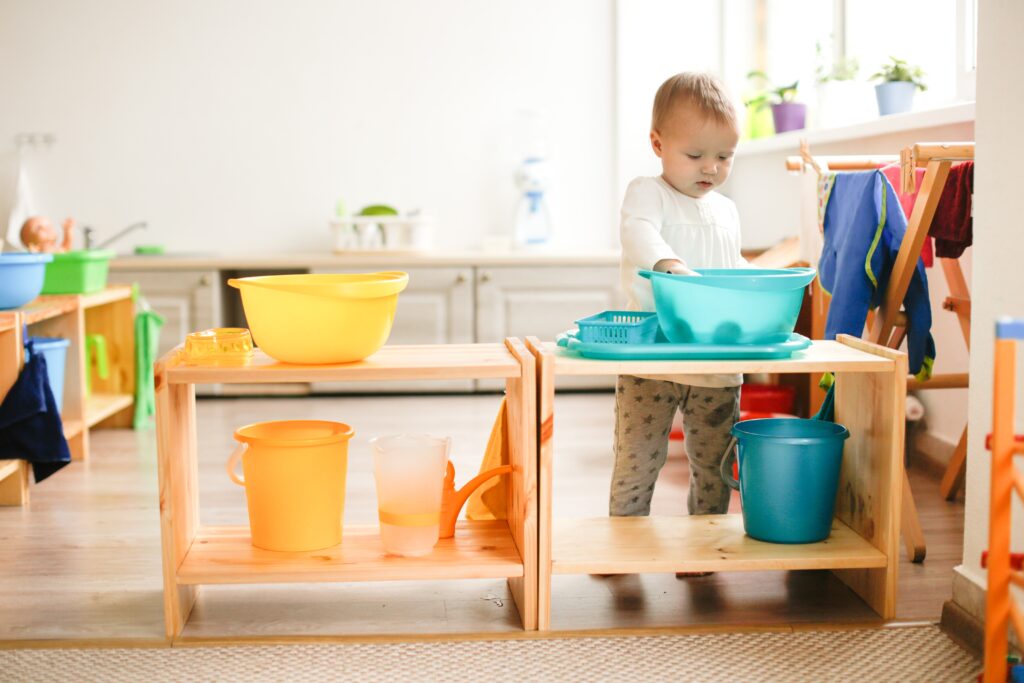
You don’t need a catalogue’s worth of light-up plastic. A well-stocked treasure basket, full of real, safe, interesting objects a seated baby can explore, will hold attention for longer than most toys, and heuristic play with everyday materials gives mobile babies exactly the “what can I do with this?” experiences their brains are hungry for. The EYFS sets specific requirements for under-twos, and a thoughtfully planned environment makes meeting them feel natural rather than bolted on.
Our online course, Working with Babies: Best Practice in the Baby Room, pulls all of this together: brain development in the first two years, attachment and respectful care routines, serve-and-return communication, treasure baskets and heuristic play, and the EYFS requirements for your youngest children. It’s written for the practitioner who is already kind and capable but wants to understand the why behind the practice.
December is honestly a decent month to do it, too. While the older rooms are consumed by festivities, the baby room, mercifully exempt from nativity duty, often gets a quieter fortnight to think.
Give your baby room the expertise it deserves
Working with Babies: Best Practice in the Baby Room covers brain development, attachment, responsive routines and the under-twos EYFS requirements, with an NFAQ-accredited certificate at the end.
The babies in your care this Christmas won’t remember a moment of it. Their brains will carry the imprint for life, though, and the parents who handed you a wide-eyed ten-week-old in September will notice the confident, chatty one-year-old they collect next summer. That’s the job. It deserves proper training behind it.