
Three weeks from now the sky will be full of fireworks and every high street will smell faintly of sparklers and burnt toffee. Bonfire night is a gift for early years practitioners, with its endless talking points and craft possibilities, and a useful nudge for managers, because it’s the point in the year when fire moves to the front of everyone’s mind. If your last fire drill happened in July, with a different cohort of children and at least two staff who’ve since moved on, the diary is telling you something.
Fire safety training for childcare settings is a legal necessity rather than a nice-to-have. The legislation expects trained fire marshals, a workable emergency plan, and staff who each understand their own role if a fire occurs. Not “the manager knows what to do”, but everyone knows.
A nursery evacuation is its own discipline
Office fire training assumes able-bodied adults who stroll to the assembly point grumbling about the cold. A nursery has six-month-olds who can’t walk anywhere, toddlers who find the alarm either hilarious or devastating, and preschoolers who will absolutely stop to fetch a favourite welly. Getting them all out means evacuation cots, grab bags, a register that’s accurate to the minute, and adults who know exactly who counts whom, which exit they use and where they stand once they’re out.
That choreography only becomes reliable through practice. Drills at different times of day matter too. An evacuation at 12:40, mid-lunch, with the sleep room full, is a different beast entirely from one at 9:30 when everybody’s conveniently on the carpet. And don’t forget the people who weren’t there last time: new starters, agency staff, the student on placement. Each of them needs to know their role before the alarm teaches it to them.
Prevention is the unglamorous half
Most nursery fires never happen, because somebody boring and wonderful prevented them. October is the right month for that work. Heaters are coming out of storage, extension leads multiply as dark mornings demand more lamps, the laundry runs longer, and the kitchen is busier with hot food than at any other time of year. A proper fire risk assessment walks the building asking how a fire could start, what would feed it and who it would threaten, then quietly removes those chances one at a time.
Marshals, extinguishers and knowing your limits
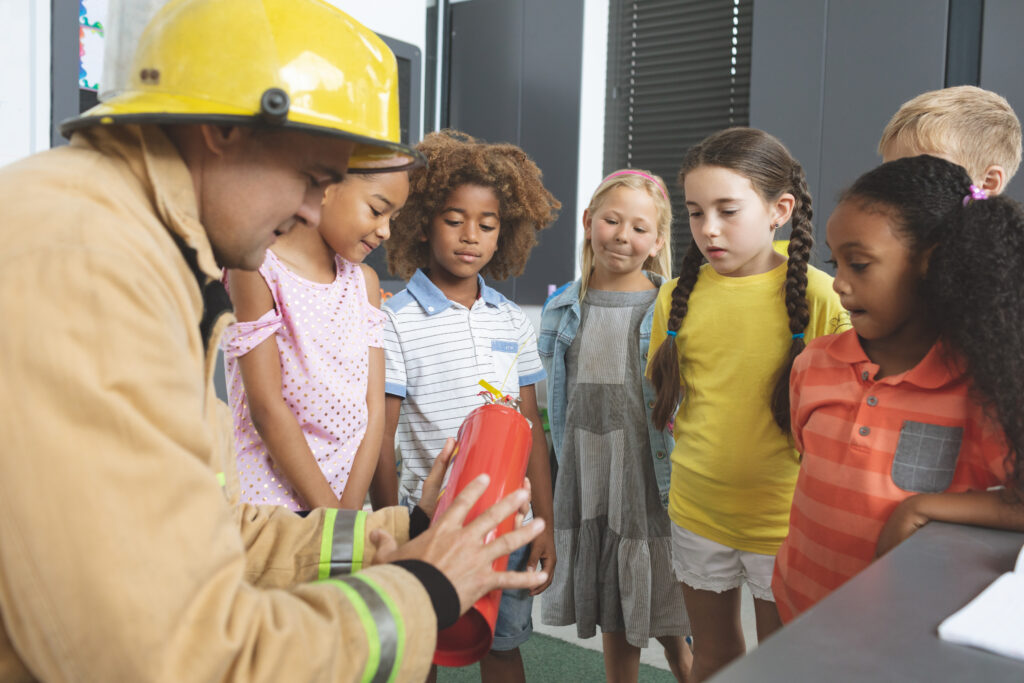
When it matters, someone in the building needs to own the moment: sweeping rooms, checking toilets, carrying the register, meeting the brigade at the gate. That’s the fire marshal’s job, and it needs actual training rather than just a name on a laminated sheet. Staff should also understand the different classes of fire and which extinguisher matches which, since the wrong choice can make things spectacularly worse, alongside the more important lesson of when not to fight a fire at all. In a building full of small children the priority is always the same: people out, doors closed, brigade called.
Our Fire Safety (Level 2) course covers all of this with early years settings specifically in mind: fire safety legislation and your obligations as a childcare provider, identifying and reducing hazards, carrying out a fire risk assessment, marshal and warden roles, the correct evacuation procedure for your setting, and fire classes with their matching extinguishers. It’s online and fully self-paced, so staff can complete it around their shifts, and it works well as whole-setting training, because in an emergency everybody has a part to play.
Ready before the first rocket goes up
Fire Safety (Level 2) trains your whole team in prevention, fire risk assessment and early years evacuation, with an NFAQ-accredited certificate for compliance and Ofsted.
Run the drill this week. Time it, note what went wrong (something always goes wrong, that’s what drills are for), fix it, and run it again in a month. Then when the fireworks start over the rooftops in November, you can enjoy them with the children, knowing your building would empty calmly if it ever had to.