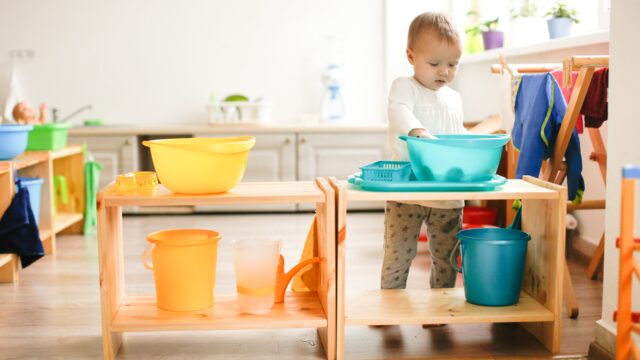
Time outside is not a break from learning. Outdoor play supports development across every area, not only physical development. This outdoor play training for early years teams looks at how outdoor play supports children’s physical, emotional, intellectual and social development, what the EYFS says about outdoor learning, and what good outdoor practice looks like in a real setting, whatever the size of your space.
The course is built for practitioners who want outdoor sessions to be planned provision rather than garden time. It gives you the reasons, so you can explain them to colleagues and parents, and the practical detail to act on them.
Why outdoor play matters in the early years
Running, skipping, jumping and climbing build stronger muscles and endurance, and children develop coordination, agility and balance through trial and error. Sunlight on the skin helps the body produce vitamin D. Outdoors, children take positive risks at their own pace, which builds confidence and independence. They use all five senses at once, invent their own games, and meet children who are different from them, learning to communicate with their peers without an adult brokering it.
The course explains that the EYFS recognises the importance of outdoor learning and states that young children must have access to outdoor spaces. It does not rank indoor and outdoor learning: both can be equally effective when sessions are carefully planned. The lesson resources also point to Development Matters, the non-statutory guidance, which recommends outdoor play as a teaching tool across all seven areas of learning. With access settled, the real question is what you plan for children once they are outside.
What’s in the course
- Why outdoor play is importantThe case for regular time outside, from birth onwards.
- Physical benefitsStrength, endurance, motor skills, and sunlight for vitamin D.
- Emotional developmentPositive risk, confidence, independence and a connection with nature.
- Intellectual developmentSensory engagement, imagination and making sense of the world.
- Social skillsBuilding relationships, noticing others’ feelings and communicating with peers.
- What the EYFS says about outdoor learningAccess to outdoor spaces, and why indoor and outdoor learning can be equally effective.
- Effective outdoor practiceThe space, the adults, the materials and planning across the areas of learning.
- Good practice in actionWhen to step in and when to stand back, clear systems, and a versatile space children can change.
- Assessment10 questions. Pass mark 80%. Resit as many times as you need.
What you’ll learn
- Four ways to make the case for outdoor time: physical, emotional, intellectual and social development
- How swinging helps a child who is not yet walking, as they learn to sit up, hold on and move with the swing
- How positive risks taken at the child’s own pace build self-awareness, independence and confidence
- What the EYFS says: young children must have access to outdoor spaces, and indoor and outdoor learning can be equally effective when carefully planned
- What a good outdoor space needs: shade and shelter, drinking water nearby, protection from trips and falls, varied features and a quiet area
- How to cover the areas of learning across sessions, such as running and climbing for physical development, patterns and materials for understanding the world, and gardening in small groups for social skills
- When to step in with a challenge and when to let children lead, decided by observation rather than the clock or adult comfort
- Why children should be able to change the area, find equipment themselves and leave a project standing to come back to
Who this course is for
- Practitioners who plan and lead outdoor sessions
- Room leaders who want outdoor time to count as provision, not just a break
- Managers reviewing their outdoor space and how it is used
- Baby and toddler room staff, since the benefits run from birth onwards
How it works
- OnlineStudy on any device and pick up where you left off.
- Interactive moduleShort slides you work through at your own pace.
- 10-question assessmentPass mark 80%. Resit as many times as you need.
- CertificateIssued when you pass. NFAQ accredited.
Training your team
Good outdoor practice depends on committed staff who understand the value of children playing outside, so the course works well taken by the whole team. The lesson includes an outdoor provision audit, a session planner with a weekly coverage grid, and a card of common barriers to getting outside with a practical resolution for each. Choose the number of learners at checkout, with group rates from 3 learners, or get it as part of the Training Portal for £5 per learner per month. Related courses: Loose Parts Play and Characteristics of Effective Learning (CoEL).
Frequently asked questions
What does the EYFS say about outdoor play?
The course explains that the EYFS recognises the importance of outdoor learning and states that young children must have access to outdoor spaces. Indoor and outdoor learning can be equally effective as long as sessions are carefully planned.
Is outdoor play mainly about physical development?
No. It supports physical development, and also emotional, intellectual and social development. Outdoors also offers quiet time and relaxation, not only space for letting off steam.
Our outdoor space is small. Is the course still useful?
Yes. Good practice is about putting children in the most effective learning situation with whatever facilities you have. The lesson includes a barriers and resolutions card that covers common problems, from the weather and ratios to a tiny yard.
When should adults step in during outdoor play?
When observation shows the right moment to carry the children forward, for example with a new challenge. Sometimes children are best left to work things out for themselves. Watching first is what tells you which is needed.
What happens if I don’t pass the assessment?
You can resit it as many times as you need until you pass. Your certificate is issued as soon as you reach the 80% pass mark.
Does the course help us plan outdoor sessions?
Yes. It shows how to spread the areas of learning across different outdoor sessions, and the downloadable session planner and weekly coverage grid help you check every area gets its turn outside.