
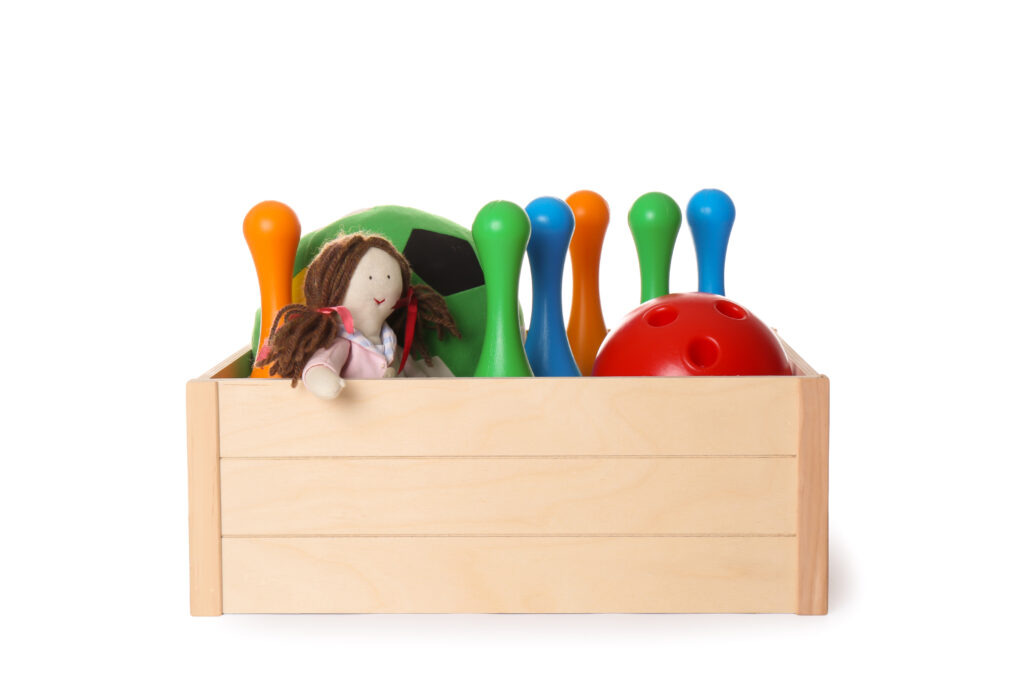
There’s a moment most practitioners will recognise. The setting spends good money on a bright plastic toy kitchen, and the children play with it for twenty minutes before drifting back to the enormous cardboard box it arrived in. The box becomes a boat, then a den, then a hat. The kitchen stays a kitchen.
That’s the whole case for loose parts play in one scene. A toy telephone can only ever be a telephone. A cardboard tube can be a telescope, a tunnel, a trumpet or a chimney, depending on who picks it up and what they’re wondering about that morning.
What counts as a loose part
Loose parts are open-ended materials with no fixed purpose. Pinecones, wooden pegs, lengths of guttering, fabric offcuts, curtain rings, corks, shells, crates, old saucepans. Nothing on that list tells a child what to do with it, and that’s precisely the point. Because the material doesn’t dictate the play, the child’s own ideas have to do the work, and that’s where the learning lives.
There’s proper thinking underneath all this, too. The idea of affordances describes how children read the possibilities in a material rather than its intended use. Schema theory explains why one two-year-old spends a week transporting pebbles around the garden in a handbag while her friend lines them up along the windowsill instead. Loose parts feed both, because the same basket of objects can serve completely different lines of enquiry at the same time, in the same room, with no argument about whose turn it is to have the toy that only does one thing.
High summer is the ideal time to start
Late July might be the best moment in the whole year to give loose parts a proper go. The garden is in constant use, the water tray is out, and natural materials are everywhere. A plank, a crate and a bucket of water will hold a group of three-year-olds far longer than most things you could order from a catalogue, and the tidying up can happen in the sunshine rather than a crowded cloakroom.
Sourcing barely needs a budget, which is a relief in a sector where every pound gets watched. Try:
- Parents, for clean recycling, odd buttons, old scarves and kitchen cast-offs
- Scrap stores and charity shops, for baskets, tins and interesting containers
- Walks and outings, for pinecones, sticks, stones and shells
- Local tradespeople, for offcuts of wood, tubing and carpet samples
Babies belong in this picture as well. Treasure baskets of safe, natural objects give even the youngest children the chance to explore texture, weight and sound, and our Loose Parts Play course covers provision by age group, from the baby room right through to preschool, indoors and out.
Watch first, talk second
The adult’s role is where loose parts play succeeds or quietly dies. Hover too close and narrate every move (“Are you building a tower? Is that a tall tower?”) and the play shrinks to fit your commentary. Step back entirely and rich moments for language and thinking slip past unnoticed. The skill is knowing when to join, when to watch and what to say when you do speak. It’s a genuine skill, and like any other it can be taught, practised and improved.
Safe doesn’t mean sterile
Managers sometimes worry that a trolley of curtain rings and corks is an incident report waiting to happen. The honest answer is that loose parts need the same risk-benefit thinking as everything else in your provision. Check materials for splinters and sharp edges, think about sizes for children who still mouth objects, build in a cleaning routine, and record your reasoning. The aim isn’t to remove every risk. It’s to weigh the risk that remains against everything the play offers, and to be able to explain that judgement calmly to a parent or an inspector.
Give your team the thinking behind the tinkering
The Loose Parts Play course covers affordances and schemas, sourcing on a budget, provision from babies upwards and risk-benefit assessment, with an NFAQ-accredited certificate on completion.
Done well, loose parts play costs almost nothing and changes almost everything about how children use your space. The cardboard box knew what it was doing all along.