
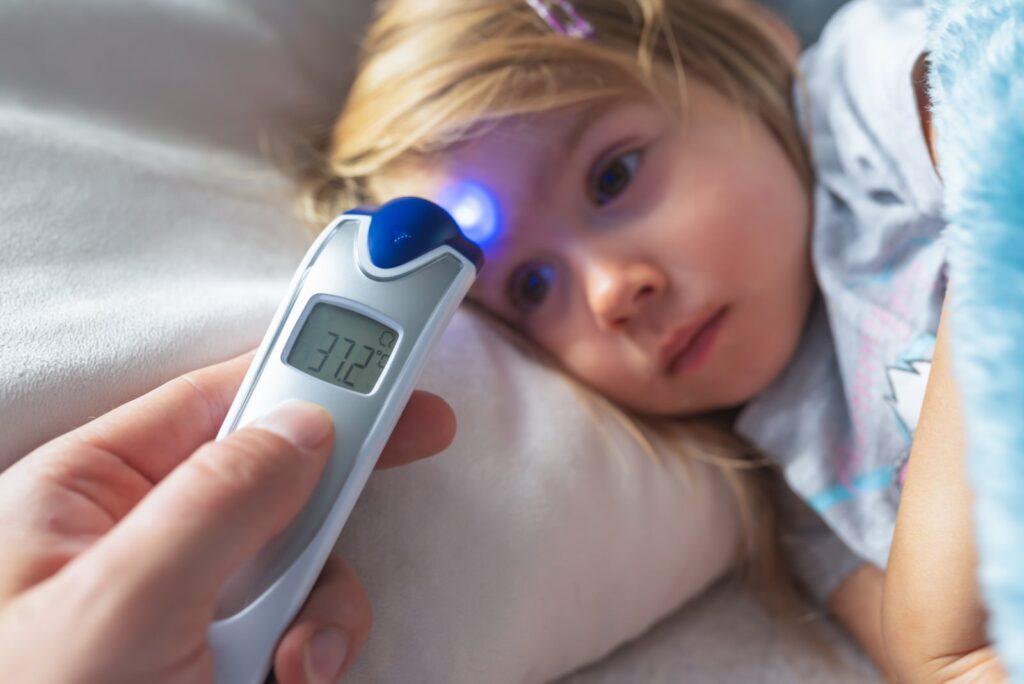
Every winter brings the same conversations at the nursery door. “She’s fine now, she’s had Calpol.” “The doctor said it’s just a virus.” “He’s had antibiotics since last night, can he come in?” The answers matter, because a nursery is one of the easiest places in the world for an infection to spread. Scarlet fever is a good example of why clear rules help everyone.
What scarlet fever looks like
Scarlet fever is caused by group A streptococcus bacteria and is most common in young children. According to the NHS, it usually starts with flu-like symptoms such as a high temperature, sore throat and swollen glands. A rash follows a day or two later. It often starts on the chest and tummy, feels rough like sandpaper, and can be harder to see on darker skin. The tongue may turn white and then red and bumpy, the so-called strawberry tongue.
It’s usually mild and clears up with antibiotics. Practitioners should still know the signs, because a child who becomes much more unwell, or has difficulty breathing, needs urgent medical help.
The 24-hour rule
National guidance from the UK Health Security Agency and the NHS is consistent. Children and staff with scarlet fever should stay away from nursery until at least 24 hours after starting appropriate antibiotics. The clock starts with the first dose, not with the diagnosis or when the rash appears.
Without antibiotics, a person can stay infectious for two to three weeks. A child whose parents decide against antibiotics should stay away until their symptoms have gone.
That gives you a clear answer to the conversation at the door. “Since last night” may not be long enough. Ask when the first dose was given.
When it becomes an outbreak
Public health guidance treats two or more cases in the same room or close group within ten days as an outbreak. At that point, contact your local health protection team. They will advise on what to tell parents and may provide a standard letter. Keep a simple log of cases, with dates and rooms, so you can spot a cluster early.
The same principles apply to the rest of the winter list. Diarrhoea and vomiting bugs, flu and chickenpox all have their own exclusion advice. A one-page exclusion table on the wall of the office, taken from current UKHSA guidance, saves a great deal of debate at drop-off.
Breaking the chain day to day
Exclusion only works alongside good everyday hygiene:
- Handwashing after toileting and nappy changes, before food, and after outdoor play, for children and adults.
- Tissues and bins within reach, with a “catch it, bin it, kill it” routine that children can copy.
- Cleaning of shared toys, surfaces and touchpoints, especially during an outbreak.
- Staff who stay home when they’re unwell, with a sickness policy that doesn’t punish them for it.
We covered the wider winter picture last January in winter bugs love a nursery. Our Infection Prevention and Control in Early Years course goes into exclusion periods, outbreak management and cleaning in more detail.
Keep winter bugs from spreading through your setting.
Infection Prevention and Control in Early Years covers hand hygiene, cleaning, exclusion and managing outbreaks, with an NFAQ-accredited certificate on completion.
Parents are under real pressure to get back to work, and turning a child away is never easy. A clear, written policy shared at enrolment turns a difficult conversation into a simple one. It also protects the other families, and your staff, from catching it too.
This article was published in October 2026. Always follow the current UK Health Security Agency guidance and the advice of your local health protection team. It is not medical advice.