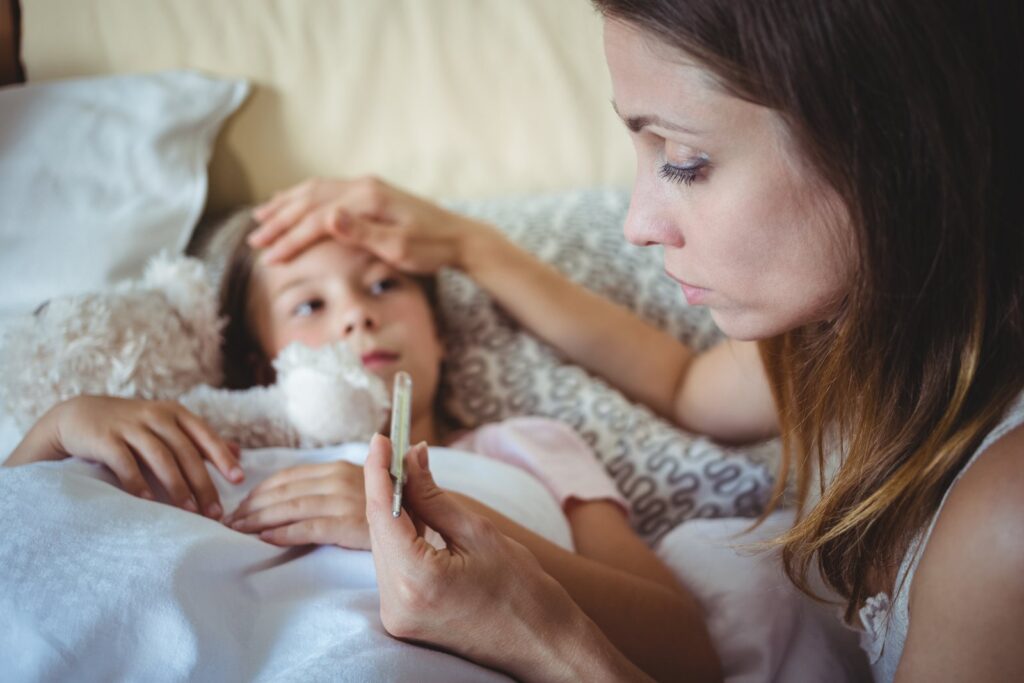
A toddler has been quiet all morning and feels hot. You’ve phoned a parent and you’re waiting for them to arrive. Then the child goes stiff, their eyes roll, and their arms and legs start to jerk. For a practitioner who has never seen a febrile seizure, it’s frightening. Knowing what it is and what to do makes all the difference to how you respond.
What a febrile seizure is
A febrile seizure is a fit caused by a high temperature, usually from an infection. According to the NHS, they mainly affect children aged between about six months and six years. In the moment they can look very alarming. The NHS says they’re unlikely to harm a child or cause long-term effects.
During a seizure a child may:
- go stiff, twitch, shake or make jerky movements
- lose consciousness and not respond when spoken to
- be sick or wet themselves
- be sleepy, irritable or confused for up to an hour afterwards
Most febrile seizures last two to three minutes. Longer than ten minutes is rare.
What to do during the seizure
NHS advice is simple:
- Note the time it starts and stops.
- Cushion their head with your hands or something soft.
- Clear the space of anything they could hurt themselves on, and move other children away.
- When it stops, put them in the recovery position and check their mouth and throat are clear.
Don’t restrain them or put anything in their mouth. Don’t try to cool them down by undressing them or sponging them with cold water during the seizure.
When to call 999
The NHS says to call 999 or go to A&E if a child:
- has a seizure for the first time
- has a seizure lasting more than five minutes
- has difficulty breathing
- has stiffness and twitching on only one side of their body
- is more sleepy than usual for more than an hour after the seizure stops
- has more than one seizure within 24 hours
Don’t take a child to A&E yourself if they’re still having a seizure or are unconscious. Call 999. In a nursery, you won’t always know whether it’s a child’s first seizure, so the safest approach is to call 999 unless their care plan says otherwise.
Fever is a sign of illness
A high temperature is usually the body fighting an infection, and most of those infections are minor. But fever can also be the first sign of something serious, such as sepsis or meningitis. Practitioners need to know the red flags that sit alongside a temperature, like a rash that doesn’t fade under a glass, unusual drowsiness, a weak cry or difficulty breathing. We wrote about this in April in knowing a child’s normal is a safety skill.
Afterwards, record what happened, including the times, what you saw and what action you took, and tell the parents in full. Look after the staff involved too, and the other children who saw it. A seizure can upset children as much as adults.
Training that covers it
Febrile seizures are covered in full paediatric first aid training, which the EYFS requires at least one person on the premises to hold at all times. Our Paediatric First Aid course is delivered face to face. For the wider skill of spotting a child who is becoming seriously unwell, Recognising the Seriously Ill Child covers sepsis, meningitis, breathing difficulties and when to escalate.
Know the signs of a seriously ill child.
Recognising the Seriously Ill Child covers the red flags for sepsis, meningitis, breathing difficulty and dehydration, and when to call 999, with an NFAQ-accredited certificate on completion.
A febrile seizure is one of those things most practitioners will see at some point. Knowing the steps beforehand means you can stay calm and look after the child properly.
This article was published in November 2026 and is based on NHS guidance. It is not medical advice and does not replace paediatric first aid training.