
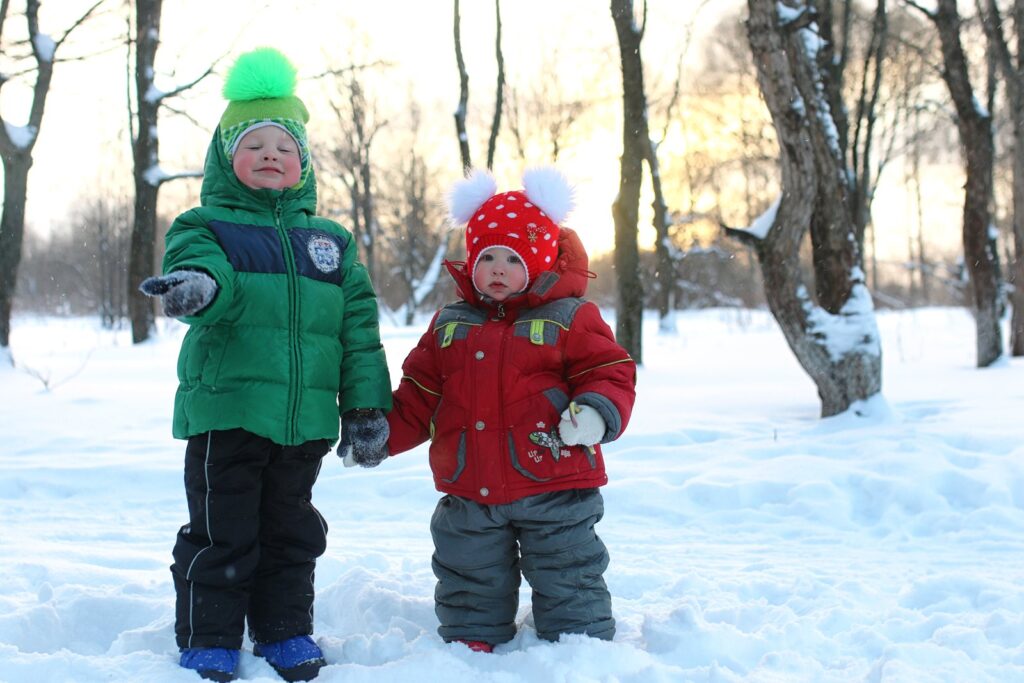
By late November it’s dark when parents collect, the garden is muddy, and the rain doesn’t seem to stop. It becomes very easy to stay inside. One wet day turns into a week, and by December the outdoor area is somewhere children walk past on the way to the car.
What the EYFS expects
The EYFS is clear. Providers must give all children daily access to an outdoor play area. Where that isn’t possible, outdoor activities must be planned and taken for all children every day, unless circumstances make it inappropriate, such as unsafe weather.
“Unsafe weather” means storms, ice that can’t be cleared or extreme cold. It doesn’t mean drizzle, puddles or a grey sky. Unless conditions are genuinely unsafe, children should go out every day in winter too.
Why winter outdoors is worth the effort
The outdoors offers things the indoors can’t: space to run, climb and shout, natural materials that change with the seasons, and the sensory experience of wind, cold and rain. Many children who find the indoor room hard, particularly those who need to move a lot, are at their best outside. Winter adds frost, ice, frozen puddles, early darkness and steamy breath, which are all things to explore.
Outdoor play also helps adults. A morning outside often means a calmer afternoon inside.
Making it work in practice
Clothing. The old saying about there being no bad weather, only the wrong clothes, holds up. Ask parents for a spare set of warm clothes, a hat and gloves. Keep a stock of puddle suits and wellies in a range of sizes for children who arrive without them. Practitioners need the right kit too. A cold, wet adult isn’t going to stay out for long.
Shorter, more frequent sessions. For babies and young toddlers, several short trips outside may work better than one long one. Watch for children getting cold, especially those who aren’t moving much.
Shelter. A covered area, gazebo or tarpaulin makes rainy days much easier and gives children somewhere to play with water and mud without getting soaked.
Light. As afternoons get dark, plan outdoor time earlier. In the last hour, torches, glow sticks and lanterns turn the dark into something to explore rather than a reason to stay in.
Risk assessment, not avoidance. Check the area every morning for ice, broken equipment and slippery surfaces. Grit paths and close off anything that can’t be made safe. Then let children play.
Ideas for the winter garden
- Freeze water in trays overnight with leaves or small toys inside, then explore it as it melts.
- Go on a hunt for frost, spider webs or footprints.
- Splash, measure and compare puddles.
- Make a bird feeding station and watch who visits.
- Paint with mud, or with water on dry walls.
Our post making outdoor play more than garden time has more ideas for planning the outdoors as a learning space. Our Outdoor Play in Early Years course looks at how outdoor play supports every area of development, what the EYFS says about outdoor learning and what good outdoor practice looks like.
Make your outdoor area work all year round.
Outdoor Play in Early Years covers why outdoor play matters, what the EYFS expects and how to plan outdoor sessions as real provision, with an NFAQ-accredited certificate on completion.
Count how many days the children went outside last week. If the answer is fewer than five, start with clothing and shelter. Those two changes make the biggest difference.